Sunday, March 30, 2014

Plein Air at the Santa Rosa Plateau

Yesterday TPAA (Temecula Plein Air Artists) and SDPAP (San Diego Plein Air Painters) met at Sylvan Meadows at the Santa Rosa Plateau. The recent rain turned the grass a muted green, but it is still a week or so early for the poppies. There were about 12 artists there. It adds so much energy to paint with a group.

I painted two paintings. The first is 9 x 12". I was amazed at how much I had to tone the greens with reds and orange. It was a sunny day, but there was a lot of moisture in the air so a haze brought the values in the distance up. I blocked in the entire painting but it didn't look like the scene, so I took out my color isolator and checked for value. I had everything two steps too dark. When that was corrected it began to look like the day.

Path on March Morning, Santa Rosa Plateau
Mary Mulvihill

As I was cleaning up I turned around and loved the scene behind me. There were three receding hills with warm olive trees on them. I quickly did a 6 x 8" color spot sketch. The purpose of the sketch is to record the colors of each object  and how they relate to each other. It isn't necessary to create an exact representation of the scene. I recorded the light, halftone and shadow colors of a tree and the hill in the foreground, mid-ground, background and sky. Combined with a photo of the scene, I have all the information I need for a studio painting. The color spot sketch took about 10 minutes. Sometime when I paint plein air the color and light are changing so fast, all I do is color spots. I end up with color reference that no photograph will ever match.

Receding Hills, Santa Rosa Plateau
Mary Mulvihill

Monday, March 24, 2014

Plein Air Supplies

This is my plein air kit. I squeeze out plenty of paint in the Masterson palette and leave all tubes except white at home.

plein air easel or pochade box and tripod
chair or folding stool
     If you like to sit.
umbrella
palette
paint
brushes
     Bristle filberts #2, #4 (two), #6 (two) and #8
canvas panels
     6 x 8", 8 x 10" or 9 x 12" 
palette knife
palette scraper
odorless mineral spirits
paper towels
sketchbook & pencil
viewfinder
color isolator
plastic grocery bag for used paper towels
hat
sunscreen
water
camera
masking tape
cart to carry everything

Plein Air at Santa Rosa Plateau, March 29th

Hello all!

Those of you who know me personally, know that I have been caregiver for my mother the past few years, since she was diagnosed with dementia. She passed away last month. Thank you to everyone who has supported me through the past years and especially the past six months. She had a long, productive and healthy life and was a few weeks shy of her 95th birthday.

I am re-initializing my blog and website, so expect to be hearing a lot from me. I currently have classes on Wednesday in Fallbrook, in drawing and painting. I'm looking for a Temecula location and am also organizing a plein air class and a critique class. I have also started a group on Meetup, the Temecula Plein Air Artists. The first plein air event is this Saturday, March 29th, at the Santa Rosa Plateau. It starts at 9:00 a.m. The best way to receive news of new plein air outings is to join the Meetup group. You will receive notices of events and a map.

I hope to see you soon, painting the Inland Valley. The best way to improve your skills and see color is to paint from life!


A few photos of my class at the Santa Rosa Plateau:


Tuesday, September 3, 2013

Sunday, September 1, 2013

Hans Heysen

Hans Heysen (1877 - 1968) was an Australian artist who painted the arid landscape of the Australian bush country, the cattlemen and drovers. He is remembered for many paintings of the native gum tree. We call them eucalyptus in California. The light in his paintings is full of atmosphere and color. More of his work can be seen here and here.


The first painting is in oil and the second in watercolor, but the color and value choices are similar. Both are high key, light drenched paintings.


The three pencil sketches are a reminder that underneath a painting with loose brushwork, is a careful plan and accurate decisions about what each stroke means.


I am assuming this is a plein air sketch. I like the spontaneity of the brushwork and color choices. He's gathering information. Heyson controls the design and values much more tightly in his studio pieces. 


Wednesday, May 8, 2013

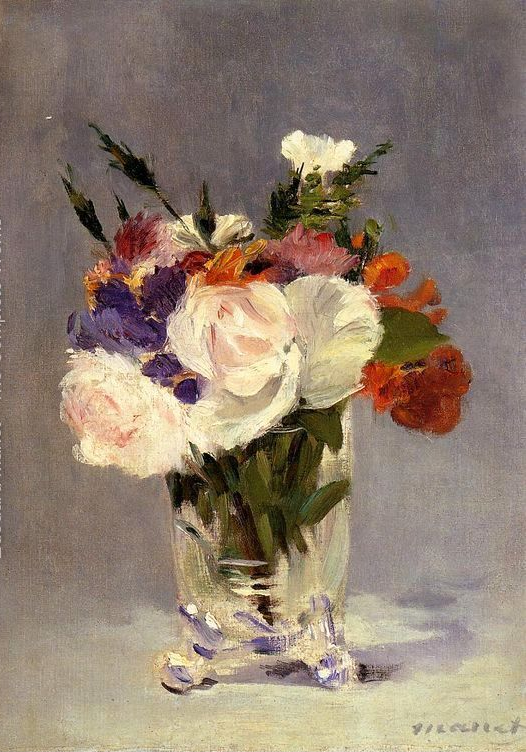
Edouard Manet's Last Flower Paintings

Today in class we had a discussion about painting from life versus painting from photographs. I always encourage students to paint from life whenever possible. You are learning to see color and value. Photographs never have the subtlety and variety of color and value found in real life. I mentioned the last flower paintings of Edouard Manet as an example of small still lifes. They may be small, but the problem solving and creativity required are the same ... color, value, chroma, edges and composition. You will learn more from doing several small still lifes or plein air sketches from life than you will from doing a large, studio painting from a photo. Direct observation from life results in paintings that have veracity and sincerity. The more you paint from life, the more you will be able to overcome the shortcomings of photographs.

Without looking the details up, my recollection is that Manet did a dozen or so small still lifes of flowers that people brought him during his last illness. He painted them in bed.


Monday, May 6, 2013

The Tree Thing Continues

The ongoing "sidebar" in class has been to study trees. Last month we worked on eucalyptus and we're still working that patch. I go on location before class every week. Somewhere close to class, within a block or two, to do a plein air sketch. For an hour or so. The paintings are practice. Arrive whatever time you like, but we break by 9:45 a.m. to get to class.

This week's location, courtesy of a screen capture from Google Maps.


The light is flat in these photos. It is much better in the morning before class. Here's a close-up of the magnificent eucalyptus, earlier in the day.


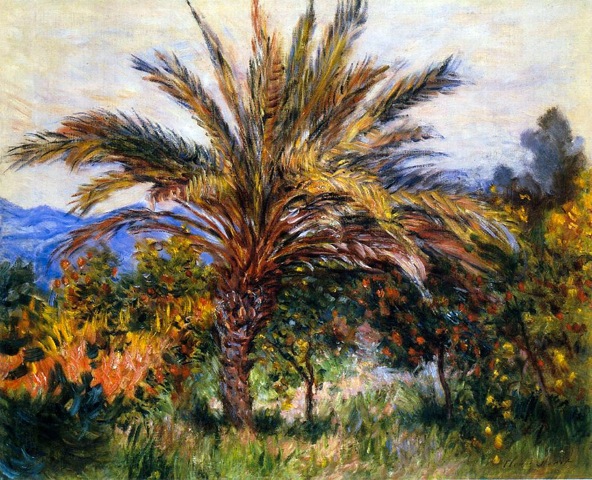
Next week, before class, we will be working some palm trees within walking distance of class. The palms caught my attention because I recently saw a Guy Rose painting of palm trees that reminded me of a few by other artists.


Guy Rose


 Winslow Homer


John Singer Sargent


Claude Monet